Vacuum Nickel-Based Brazing: Principles, Processes & Applications
I. Technology Overview
Vacuum nickel-based brazing is an advanced manufacturing technology that achieves high-performance joining of metal or non-metallic materials using nickel-based alloys as filler metals in a vacuum environment. Its core advantage is isolating air through the vacuum environment to fundamentally avoid material oxidation. Meanwhile, leveraging the excellent high-temperature stability, wettability and mechanical properties of nickel-based filler metals, it realizes reliable joining of difficult-to-weld materials. Especially suitable for scenarios requiring strict joining quality such as superalloys, stainless steel and titanium alloys, it is a key technology in high-end equipment manufacturing.
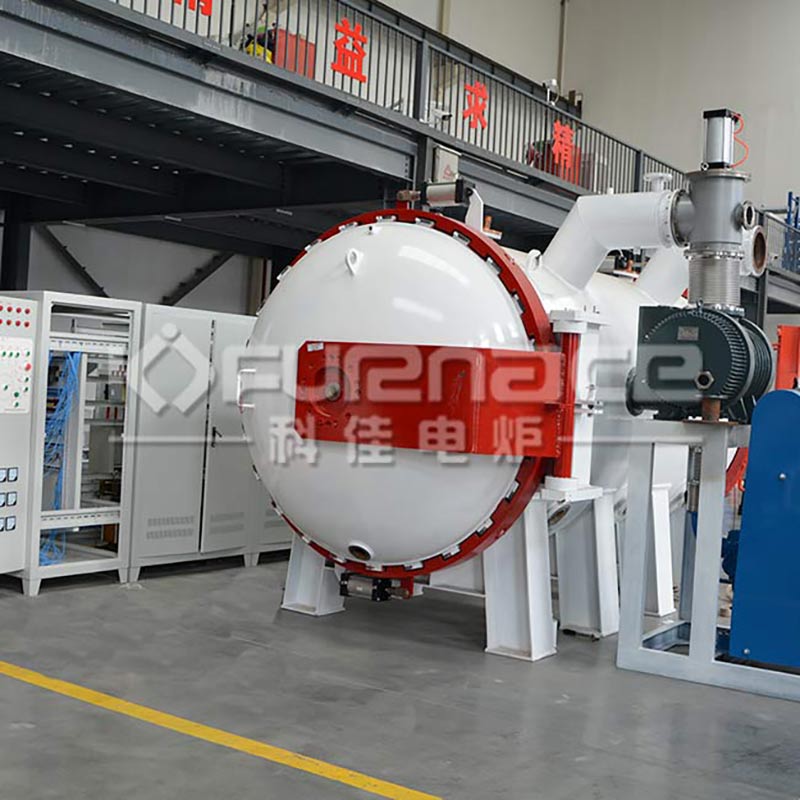
High-purity joining: No flux is involved throughout the process, completely eliminating impurity contamination caused by flux residues. The brazed seam has a dense microstructure, and the mechanical properties of the joint are close to those of the base metal, meeting the requirements of precision components.
Strong controllability of thermal processing: The temperature field in the vacuum furnace is uniformly distributed, and the heating and cooling rates can be precisely controlled through programs (error ≤ ±5℃), effectively reducing thermal stress and minimizing workpiece deformation to ensure the dimensional accuracy of complex structural parts.
Adaptability to difficult-to-weld materials: Successfully solves the problems of easy oxidation and poor joint performance of titanium alloys, nickel-based superalloys, molybdenum and other materials in conventional welding, providing a feasible solution for manufacturing special material components.
Excellent joint stability: Nickel-based filler metals themselves have good high-temperature resistance, corrosion resistance and fatigue resistance. Combined with sufficient diffusion in the vacuum environment, the brazed joints can maintain stable performance even under extreme working conditions.
III. Characteristics of Common Nickel-Based Filler Metals
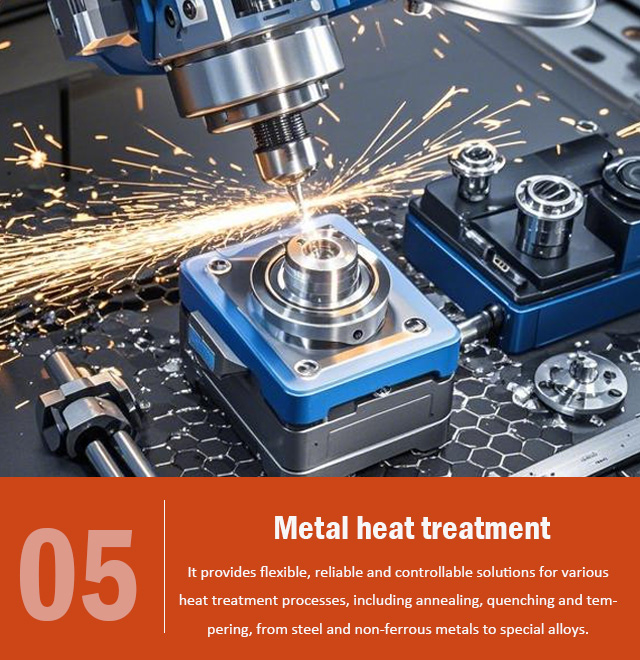
There are three main types of commonly used nickel-based filler metals: First, BNi-2, with a melting range of 970-1000℃, featuring good wettability and uniform diffusion, suitable for nickel-based superalloy honeycomb structures and aero-engine components. Second, BNi-7, with a melting point of approximately 890℃, containing chromium and having excellent heat resistance. Due to its low melting point, it is suitable for joining precision components and electronic devices under medium and low temperature conditions. Third, BNi94SiB, with a melting point of 980-1065℃, is a high-melting-point filler metal with high mechanical strength, commonly used in stainless steel high-temperature components and key structures of nuclear energy equipment.
IV. Key Process Flow
(I) Matching Principle of Filler Metal and Base Metal
The selection of filler metal directly determines the joining quality and must be accurately matched according to the base metal material: nickel-based filler metals are preferred for stainless steel components; aluminum-based filler metals are suitable for aluminum alloys; copper-based filler metals are selected for copper alloys to ensure the wetting and diffusion effect between the filler metal and the base metal.
(II) Workpiece Pretreatment
Degreasing treatment: Immerse the workpiece in acetone or ethanol solution, and remove surface impurities through ultrasonic cleaning (power 200-300W, time 15-20 minutes).
Descaling: Aluminum alloy workpieces are neutralized after being corroded with alkali solution; stainless steel workpieces are cleaned of surface oxide layers by sanding or plasma cleaning to expose the metallic luster.
Flux application: Uniformly apply special flux on the brazing surface of the workpiece, and dry it naturally or in an oven (temperature 80-100℃, time 30 minutes) to avoid flux caking.
(III) Furnace Loading and Tooling Adjustment
Workpiece placement: Follow the principle of "uniform heating and avoiding shielding", and reserve a gap of 5-10mm between workpieces; complex components are fixed with a combination of "supports + positioning pins" to ensure the brazing gap is controlled within the optimal range of 0.05-0.2mm.
Furnace load control: The single furnace load shall not exceed 80% of the effective volume of the furnace chamber to prevent welding quality fluctuations caused by uneven temperature field.
(IV) Core Process of Vacuum Brazing
Vacuum pumping and heating: Start the vacuum system, first perform rough pumping to 1×10⁻¹ Pa, then fine pumping to ≤1×10⁻³ Pa; adjust the heating rate (2-5℃/min) according to the thickness of the base metal, hold at 400-500℃ for 60 minutes to remove adsorbed gases, and then continue heating to the brazing temperature.
Brazing holding and cooling: The brazing temperature is 30-50℃ higher than the liquidus of the filler metal, and hold for 30-120 minutes to ensure sufficient wetting and diffusion of the filler metal; after holding, turn off the heating power, start the cooling system or fill with high-purity argon, control the cooling rate (3-8℃/min), and the workpiece can be taken out of the furnace only when the temperature drops below 200℃.
V. Common Defects and Control Measures
Erosion defect: Caused by mismatched filler metal and base metal, too slow heating rate or too long holding time. Solution: Replace double-layer filler metal with single-layer filler metal, increase the heating rate to 8-10℃/min when approaching the melting point, and use low heat capacity tooling such as graphite.
Discontinuous brazed seam: Mostly caused by excessive brazing gap (>0.2mm), insufficient vacuum degree or too low temperature. Control measures: Enhance the clamping force of the tooling to reduce the gap, increase the vacuum degree to ≤1×10⁻³ Pa, and strictly set the welding temperature according to the filler metal characteristics.
Porosity (pinholes): Mainly due to low vacuum degree (>2.0×10⁻³ Pa) or filler metals containing high vapor pressure elements such as Zn and Mg. Countermeasure: Set a 60-minute holding platform near the filler metal melting point to release gases, and extend the vacuum pumping time to more than 2 hours.
Low joint strength: Resulting from insufficient diffusion, base metal oxidation or volatilization of filler metal components. Improvement measures: Extend the holding time to 120-180 minutes, adopt zoned heating mode, and regularly check the equipment leakage rate.
VI. Main Application Fields
Aerospace: Used in manufacturing core components such as aero-engine turbine blades, combustion chambers and fuselage structural parts, meeting the requirements of high temperature (600-1200℃), high strength and corrosion resistance.
Energy industry: Applied in nuclear power generation equipment, petrochemical reactors, high-temperature heat exchangers, etc., manufacturing key components with high temperature and corrosion resistance to ensure long-term stable operation of the equipment.
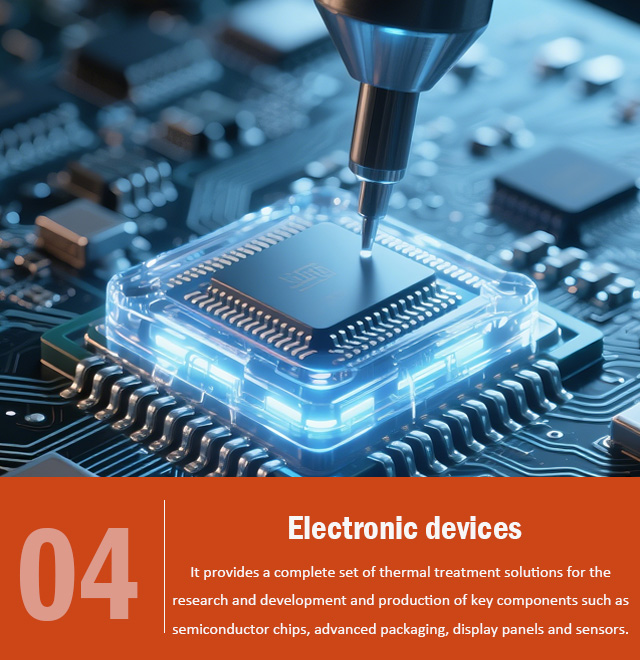
Electronic manufacturing: Suitable for joining precision products such as vacuum electronic devices, microwave devices and semiconductor components, ensuring the electrical conductivity, airtightness and dimensional accuracy of the joints.
Automotive industry: Used in automotive engine exhaust manifolds, turbocharger components, exhaust gas treatment systems, etc., improving the high-temperature resistance and service life of components and helping save energy and reduce emissions.
With its excellent joining performance and process controllability, vacuum nickel-based brazing technology has become an important support for the upgrading of high-end equipment manufacturing. As the performance requirements of products in related fields continue to improve, this technology will continue to innovate in material adaptation, process optimization, intelligent control and other aspects, providing more reliable solutions for the manufacturing of key components.
Zhengzhou KJ Technology Co., Ltd. is a high-tech enterprise specializing in the research, development and sales of heat treatment products. Our products cover muffle furnaces, tube furnaces, vacuum furnaces, atmosphere furnaces, CVD/PECVD systems, dental furnaces, bell type furnaces , trolley furnaces, etc., which are widely used in metallurgy, vacuum brazing, ceramic sintering, battery materials, metal processing , parts annealing, additive manufacturing, semiconductors, scientific intelligent instrumentation, aerospace and industrial automatic control systems and other different fields.
Please feel free to contact us.
WhatsApp: +86 18037178440
Email: web@kejiafurnace.com
 English
 简体中文
简体中文 Русский язык
 Français
 日本語
日本語 한국어
한국어 Português
 Español
 Website navigation
 Position:


 Send E-mail:web@kejiafurnace.com
 Wechat/Whatsapp: +86 18037178440
 Company Tell: +(86)18037178440





 E-mail:web@kejiafurnace.com
 Tell:+(86) 18037178440
 Whatapp:+(86) 180-3717-8440
 Address:Room 1505, Building 9, No. 26 Dongqing Street, Zhengzhou High-tech Industrial Development Zone


